
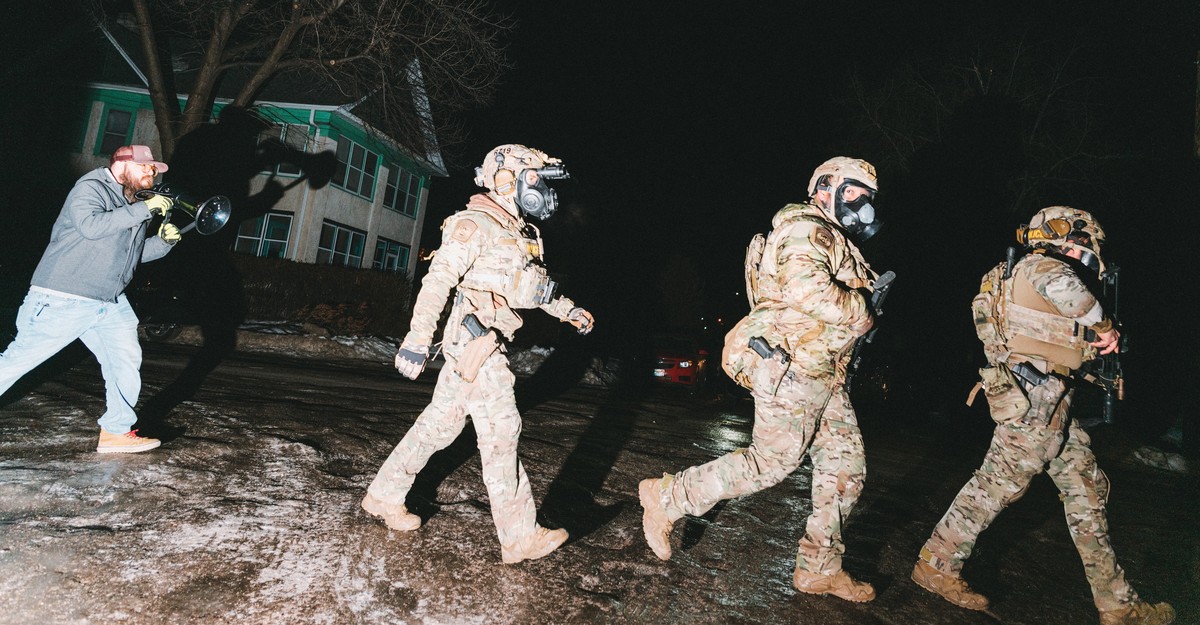
Instead, what they discovered in the frozen North was something different: a real resistance, broad and organized and overwhelmingly nonviolent, the kind of movement that emerges only under sustained attacks by an oppressive state. Tens of thousands of volunteers—at the very least—are risking their safety to defend their neighbors and their freedom. They aren’t looking for attention or likes on social media. Unless they are killed by federal agents, as Pretti and Renee Good were, other activists do not even necessarily know their names. Many use a handle or code name out of fear of government retaliation. Their concerns are justified: A number of people working as volunteers or observers told me that they had been trailed home by ICE agents, and some of their communications have already been infiltrated, screenshotted, and posted online, forcing them to use new text chains and code names. One urgent question among observers, as the videos of Pretti’s killing spread, was what his handle might have been.
The number of Minnesotans resisting the federal occupation is so large that relatively few could be characterized as career activists. They are ordinary Americans—people with jobs, moms and dads, friends and neighbors. They can be divided into roughly three groups.
~
“You don’t have to go too far south” to find places where Minnesotans “welcome ICE into their restaurants and bars and sort of love what they do,” Tom Jenkins, the lead pastor of Mount Cavalry Lutheran Church in suburban Eagan, which is also helping with food drives, told me. “A lot of people are still cheering ICE on because they don’t think that whatever people are telling them or showing them is real.”
You must log in or register to comment.